From Parents.com, 8/2023
The first time I bought a backpack for my son, it was easy: The most adorable bear-shaped Skip Hop backpack was on display at our local kids’ shoe store. He was 2 and loved anything I bought him. But by the time he was in kindergarten, I faced the dilemma many of us do when shopping for kids’ backpacks: Do you get the Paw Patrol/Minecraft/L.O.L./cartoon-flavor-of-the-moment version they’re begging you for? Or do you choose something more classic and durable—say one that’s been tested and recommended by your friendly neighborhood Parents editors and their kids?
My prediction is that for some school years, every parent winds up choosing the character-themed backpack. After all, we want our kids to be excited about loading it up and wearing it every day. I say go for it, but maybe don’t drop a ton of cash on their choice, because they inevitably will outgrow their favorite things sooner than you expect. As much as we hate the waste created by kids’ products that are practically disposable after a year of use, sometimes you just have to take that loss.
But there will also be years when your kid lets you—and even actually wants you to—buy them a high-quality, trendy-character-free backpack that’s comfortable, holds everything they need in an organized and accessible way, and is sturdy enough to get them through a few grades of school. And since those bags require a bit more of an investment, we at Parents decided to help you out. We tested 53 of the top backpacks on the market with our own kids over the past fall, spring, and summer to see which ones are truly worth it.
Of course, you can just take our word for it and buy one of the 23 products we chose after that test. Or you can go a step further and learn from our experience on how to shop for a backpack, evaluating it based on the criteria we believe matter most. Here’s what we looked at in our test:
Design
When we talk about backpack design, we’re talking about two things: the aesthetics of the bag and the way its material, shape, and features function in the real world. When the backpacks first arrived in our homes, we examined them, answering questions about how they look, how many pockets they have, and whether they have certain organizational features, such as internal zippers, hooks, and water bottle holders.
When our kids first put the backpacks on, we took note of whether they could open the bag one-handed while wearing it. We made sure to ask our kids how they felt about the bags. Some kids will immediately tell you how much they love or hate their backpacks. For the others, we observed whether they still wanted to use that bag or asked to switch back to an older one after a few months.
A lot of this is purely subjective—naturally, one kid is going to love a skateboard-adorned Hanna Andersson bag more than this solid North Face option. That is why we still suggest presenting kids with photos of their options when you’re shopping. Still, we think this part of the test helped narrow down the choices considerably.
Capacity
We divided our backpack test into three different age groups: pre-K through fourth grade, fifth grade through eighth grade, and ninth grade through twelfth grade. One reason was to test whether the bags could hold everything a child of a given age needs for school. Most first graders aren’t going to be carrying big textbooks and cell phones, after all.
When shopping for a backpack online, you can look at its listed capacity (usually noted in liters), but that information is often not listed for smaller kids’ backpacks. Next, you can look at dimensions—for example, our favorite for preschoolers, the Skip Hop Spark, is 10.5 inches wide x 5 inches deep x 14 inches high; the Wildkin backpack we named best for fifth-sixth graders is 12 inches wide x 7.5 inches deep by 17 inches high.
But really, it’s hard for those numbers to mean anything to most of us, so instead, we assessed the backpacks’ capacity by packing them with our kids’ school essentials. Did they fit everything easily, or did some items, like lunch boxes and jackets, have to stay outside the bag? Was there a sleeve for tablets or laptops? That Skip Hop fit a water bottle, blanket, extra clothes, hat and mittens a preschooler needed. The Wildkin fit textbooks, a lunch box, an iPad, and plenty of small items like pencils and scrunchies a 10-year-old girl required for school.
When the bag was full, we also tested whether the water bottle still fit in its designated pocket—you’d be surprised how often bags fail that particular test. (Or maybe you wouldn’t be surprised because that’s how your kid has wound up losing several bottles over the course of a school year.)
Some bags go too far in the other direction, and they’re too big or have one too many pockets (making kids have to open several just to find what they need). A few of those bags, like the Nike Hayward, remained on the list but got bumped up to being the best for an older age group.
Comfort
(Puts on old-lady voice) When I was a kid, no one seemed to care if my backpack was overloaded with heavy books, digging into my shoulders, and making me walk crooked. Let’s do better! We consulted with experts to discuss the healthiest features of a backpack for kids. Padding on the shoulder straps and the back of the bag, chest straps, and waist straps—all with a reasonable amount of adjustability—will help distribute weight comfortably for a kid, they said.
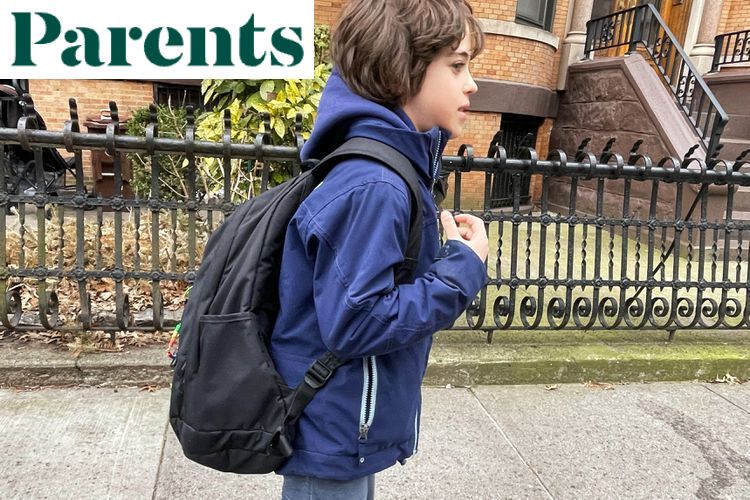
We asked our children to describe how they felt wearing their bags the first time they used them, and then again after months of lugging them to and from school. We also made the kids run with the backpacks to see whether the straps stayed in place and whether the bags slammed into them awkwardly. One teen tester who was skeptical of his Jansport’s chest strap even admitted that it made a difference when he was carrying a lot. Then, again, we observed whether our kids stuck with the bags after the first testing period was over or asked to switch to something else they found more comfortable.
By the way, no bag is going to be comfortable if you put too much into it. According to the American Academy of Pediatrics (AAP), kids shouldn’t carry more than 15% of their body’s weight.1 Since it’s hard to go around weighing their bags every day, just make sure they don’t have to lean forward in order to carry their bag to school.
Ease of Cleaning
May you never have the misfortune of buying an adorable pastel-colored backpack for your kid, only to see it turn a dull tan after a week and never again return to its former glory. Kids do not care where they put their bags down or what they spill on them: Two of our testers’ kids even fell into mud puddles with their backpacks going to school. (Our favorite for younger kids, the Wildkin Pack-It-All, just needed a wipe with a rag and water after that mud bath.) My son seemed to have submerged his Nike Hayward in a swamp during an after-school party, and even though I’d forgotten it in the hallway all weekend, it looked brand new after a wipe-down.
And how many accidental science experiments do they wind up conducting with the abandoned snack crumbs in the bottom of their bags? If there were so many crevices in a bag we couldn’t just shake out those crumbs, we scored that backpack a little lower.
All this is to say, we evaluated how easy it was to clean these bags, whether by wiping them or putting them through the wash (when manufacturers said they could), to get them looking close to new.
Durability
If you want to make this a worthy investment, you need your kid’s backpack to last at least one school year unscathed, if not more. Look for tough, water-resistant fabric, quality zippers that don’t break, and water bottle pockets that won’t fray. We gave our initial evaluations of our backpacks after two months of using them and described how the bags looked then compared to when they were brand new.
Then we also checked in three months after that. This is how we discovered that the zipper of one initial favorite, the L.L.Bean Deluxe, actually broke (though L.L.Bean did live up to its reputation by replacing that bag for the first grader using it). As of this writing, we’re getting ready to gather insights six months out from the first test. Most of our other favorites are doing great so far, but if we hear about some getting destroyed, they’ll likely come off the list.
Value
Price alone is one way of judging a product. But because we think a good, long-lasting backpack is worth the investment, we didn’t just rate these based on dollar amounts. Rather, we took into account how the backpack performed in all other areas before even looking at its price. Then we thought about whether we’d buy it outright with no sales, whether we’d wait for a discount to buy it, or whether it just isn’t worth any amount of money. Some of us will still need to go for the least expensive backpack they can, because all prices are just shocking these days—in which case, you can’t go wrong with the High Sierra Loop. But others are lucky enough to be able to splurge a little on something gorgeous and made of recycled plastic, like one from State Bags.
We’ve thought a lot about backpacks to bring you our selections. We’re hoping that means you can focus instead on something more important to get ready for the start of the school year.